Speed is trained, not inherited
Acceleration mechanics, change of direction, and the strength underneath both. We test in week one and test again at the end of the block, under the same conditions. The difference goes on the sheet, not into anyone's memory of how the session felt.
Speed block — Acceleration
| Movement | W1 | W3 | W5 | W6 |
|---|---|---|---|---|
| 10 yd split | 1.82s | 1.78s | 1.74s | 1.71s |
| 20 yd split | 3.04s | 2.99s | 2.94s | 2.90s |
| 40 yd dash | 5.12s | 5.04s | 4.98s | 4.94s |
| Broad jump | 88in | 91in | 94in | 96in |
40-yard down 0.18s in six weeks. Measured, not estimated.
What actually gets trained
Acceleration, not just top speed
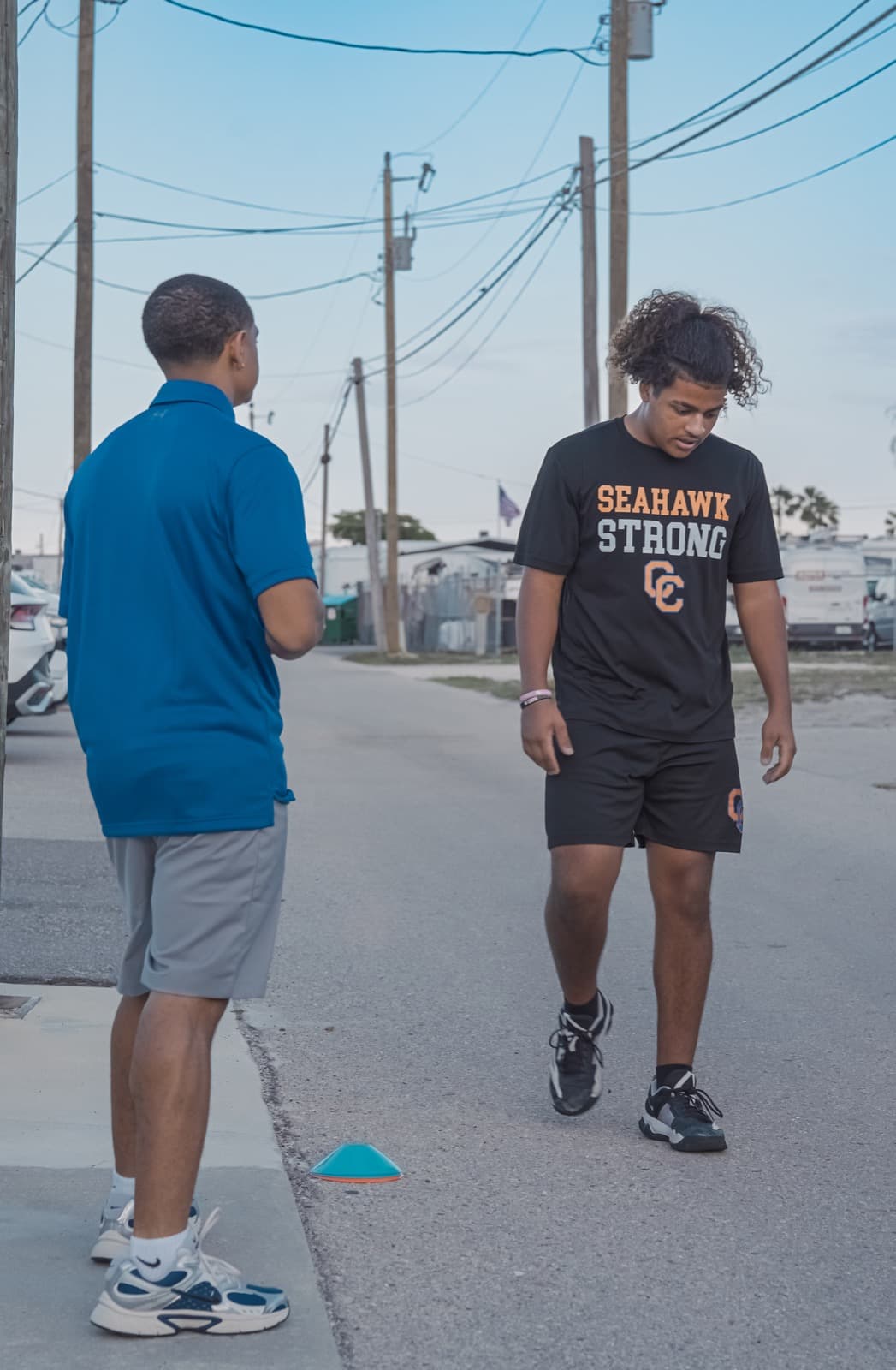
Most plays are decided inside the first ten yards, and almost nobody trains that specifically. Shin angle, ground contact, arm action. All of it is coachable, and it shows up on a stopwatch within weeks.
Change of direction
Getting fast is half of it. Stopping, redirecting, and reaccelerating is where games are won, and it takes eccentric strength most young athletes have never built.
The strength underneath
You cannot express force you have not built. Strength work here is programmed to serve the sport, not to chase numbers in the weight room.
Six weeks, and a number at both ends
Nothing here depends on anyone’s impression of how fast an athlete looked. We measure, we train, we measure again.
Test
10-, 20- and 40-yard splits, broad jump, and a movement screen. We write the numbers down. Everything after this is measured against them.
Build
Mechanics and force production together. Sprint technique on fresh legs early in the session, strength work after, volume managed so nothing carries into game day.
Retest
Same conditions, same surface, same time of day. Then the next block gets written from what actually changed.
In-season
The job is to arrive fresh on game day and leave the season healthier than it started. Lower volume, mechanics maintained, strength held rather than chased. Training should never be the reason an athlete is flat on Friday.
Off-season
This is where the gains get made. Higher volume, real strength progression, and enough time to change how an athlete moves before it matters on a scoreboard.
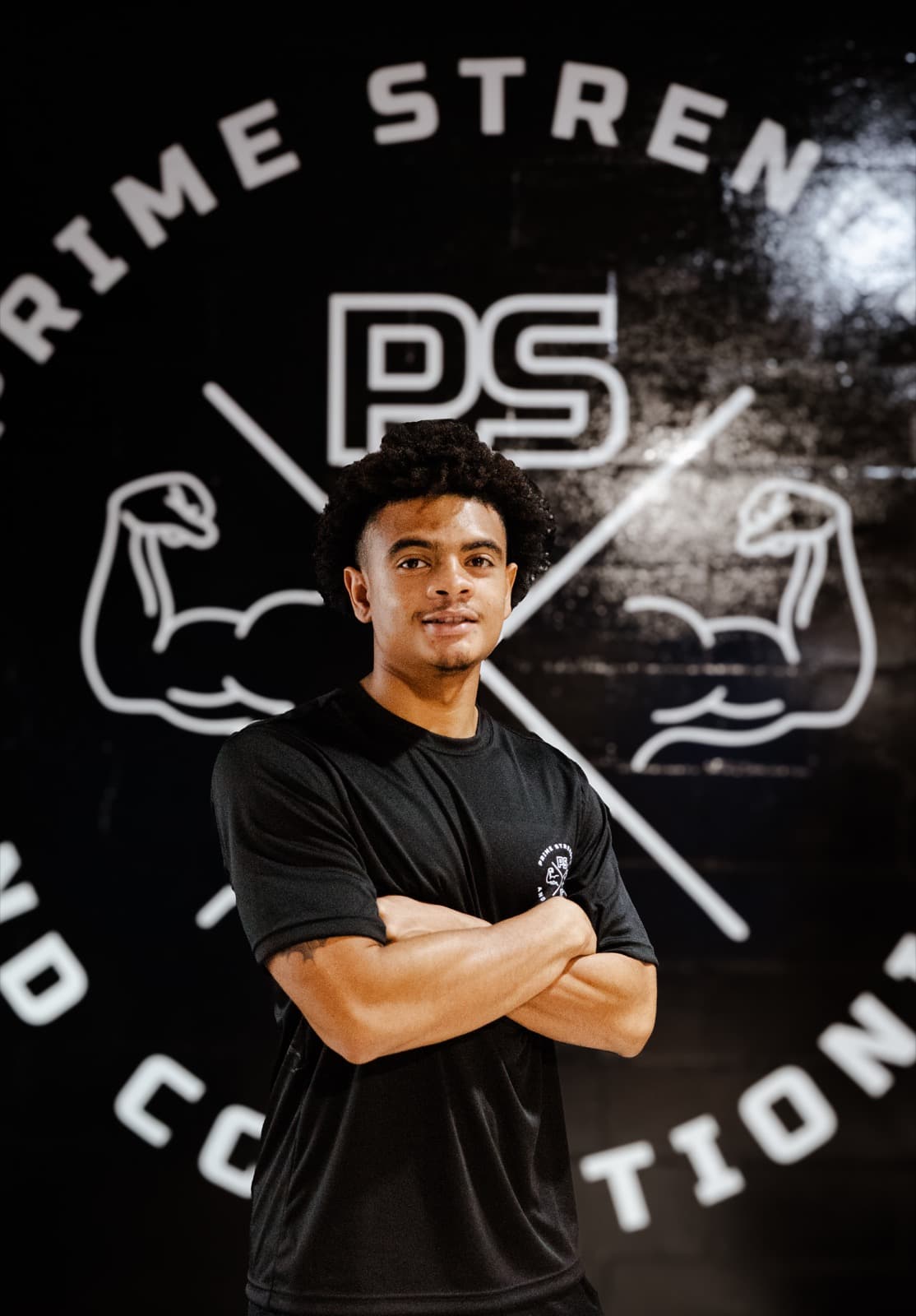
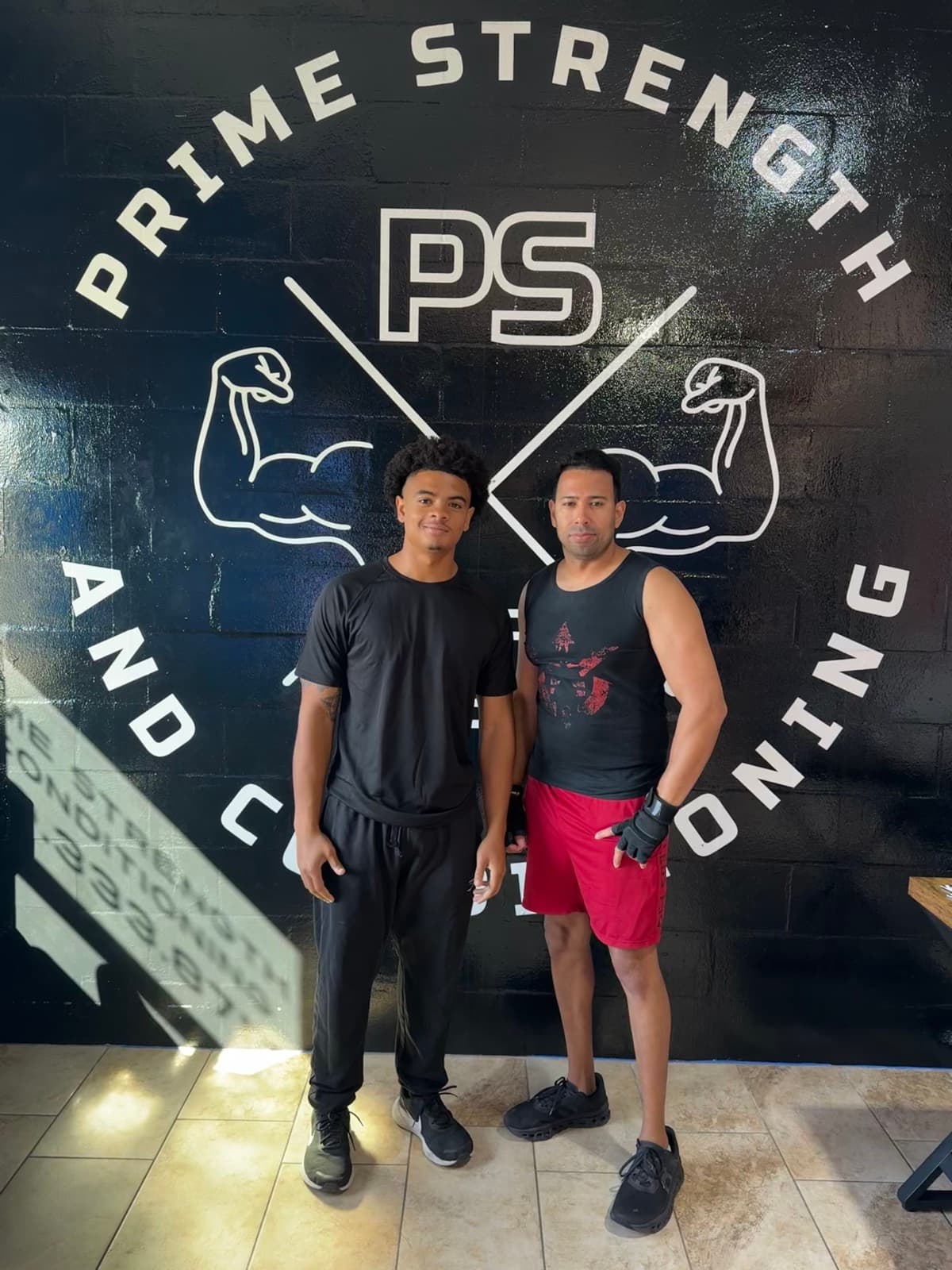
About Me
I have been involved in sports for as long as I can remember. At eighteen I injured my shoulder, and the rehabilitation that followed changed the way I understood training. It showed me how connected the body is, and how much has to work together before it becomes strong.
That experience is what led me into this profession. I earned my personal training certification through ISSA in 2023, and I have continued my education since: a nutrition certification, also through ISSA, and most recently the Biomechanics and Human Movement certification with DCB Fit in Miami, a facility that trains high-level adults alongside athletes progressing to the collegiate and professional levels.
Every program I write is built on the same five pillars: mobility and injury prevention, movement, strength, intent and nutrition. They apply to every client I take on. What changes between an adult rebuilding a routine and an athlete chasing a faster forty is how each pillar is applied, not whether it is.
Training in Cape Coral, Florida.
Five pillars
Mobility, movement and strength build on each other in that order. Intent and nutrition run underneath all three. They decide whether the first three amount to anything.
01
Mobility & injury prevention
These are the same job, not two.
- Desk hours and daily life leave you tight and working through less range than you have. Mobility work gives that range back before anything gets loaded on top of it.
- Multi-planar movement and real recovery, so the body can take the directions sport asks for, and keep taking them all season.
02
Movement
Train the patterns you actually use.
- Functional movement that makes ordinary life easier: stairs, luggage, getting off the floor without planning it first.
- Drills and exercises that look like what happens in a game, rather than what looks good in a gym.
03
Strength
The foundation everything else stands on.
You cannot progress past what you can hold. We build a baseline of foundational strength first, and every goal after that is measured against it.
04
Intent
Every rep is done on purpose.
Full effort and full attention on every drill. Going through the motions trains you to go through the motions.
05
Nutrition
Training is the stimulus. Food is what you build with.
- Body composition is decided at the table at least as much as it is in the gym. You can train well for twelve weeks and see almost none of it if what you eat doesn't support the work.
- An under-fueled athlete doesn't recover, doesn't adapt, and gets hurt more often. What goes in between sessions decides how much the sessions are worth.
What parents ask first
How young is too young to start lifting?
Supervised resistance training is well supported for adolescents once they can follow coaching and hold technique, usually around twelve to thirteen. Younger athletes work on sprint mechanics, jumping and landing, and bodyweight strength, which is where the return is at that age.
Will this leave my athlete sore for games?
It shouldn't, and if it does the programming was wrong. In-season blocks are written around the game schedule, with the heavy work placed as far from competition as the week allows.
They play year-round. When does this fit?
Around the season rather than instead of it. Tell me the competition calendar at the evaluation and the block gets built to it. Even one focused session a week beats an off-season that never comes.
Where and when do sessions happen?
At 815 SE 47th St in Cape Coral, out of Prime Strength and Conditioning. Times are built around school and practice. Tell me the weekly schedule and we'll find slots that don't fight it.
Does my athlete need a gym membership?
No. I'm a private coach, so the session fee covers the training and the facility. Sessions are booked in a package rather than one at a time: two, four or six sessions across a two-week stretch, or the same three options monthly. We pick the number that fits the season and the block gets written to it.
Do you work with teams?
Yes. Small groups and teams both work. Reach out with the number of athletes, the sport, and your season dates and I'll tell you what's workable.
Should I stay during the session?
You're welcome to, and plenty of parents do. Some athletes work better without an audience. You'll know which yours is. Either way you'll get told what we did and what changed.
What happens at the first session?
We test. Ten-, twenty- and forty-yard splits, broad jump, and a movement screen, then a conversation about what the block should look like. It's charged at the normal session rate. Everything after it is measured against those numbers. Parents are welcome and usually should be there.
Send a text, and we'll find where the time is going
Tell me the sport, the position and the season calendar. We'll set up a short call, and if it's a fit your athlete's first session puts real numbers on paper instead of an opinion. Parents are welcome and usually should be there.