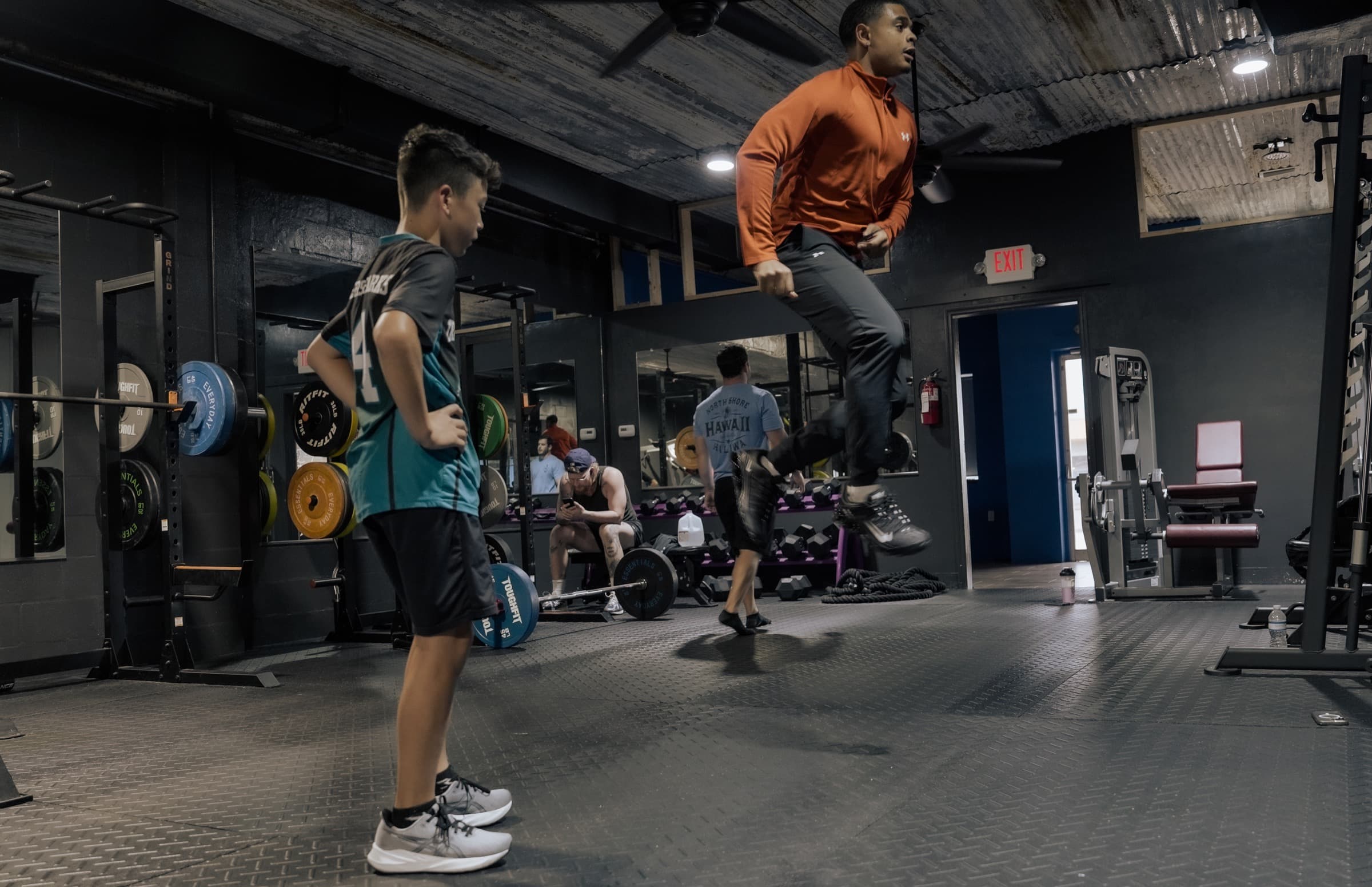
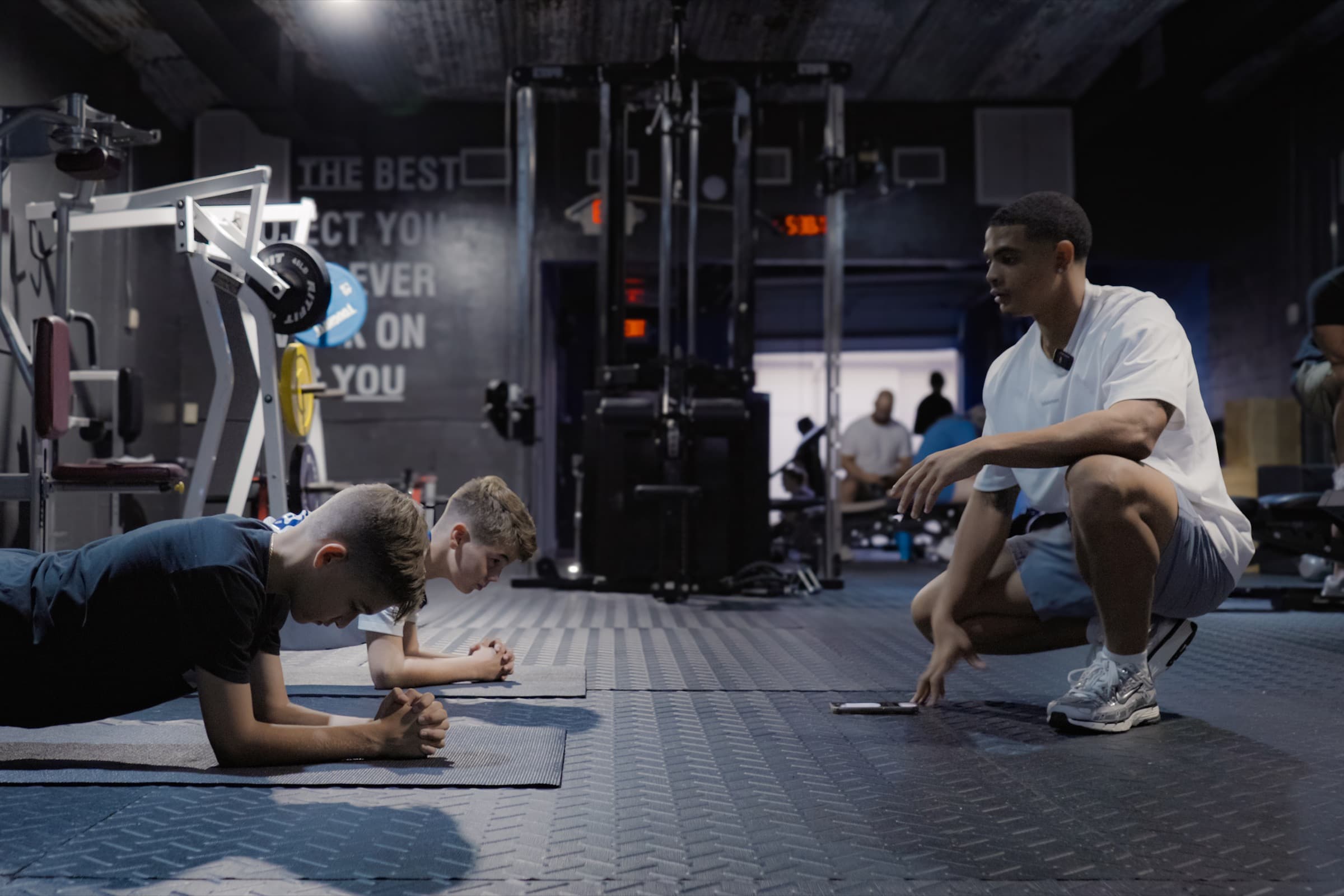
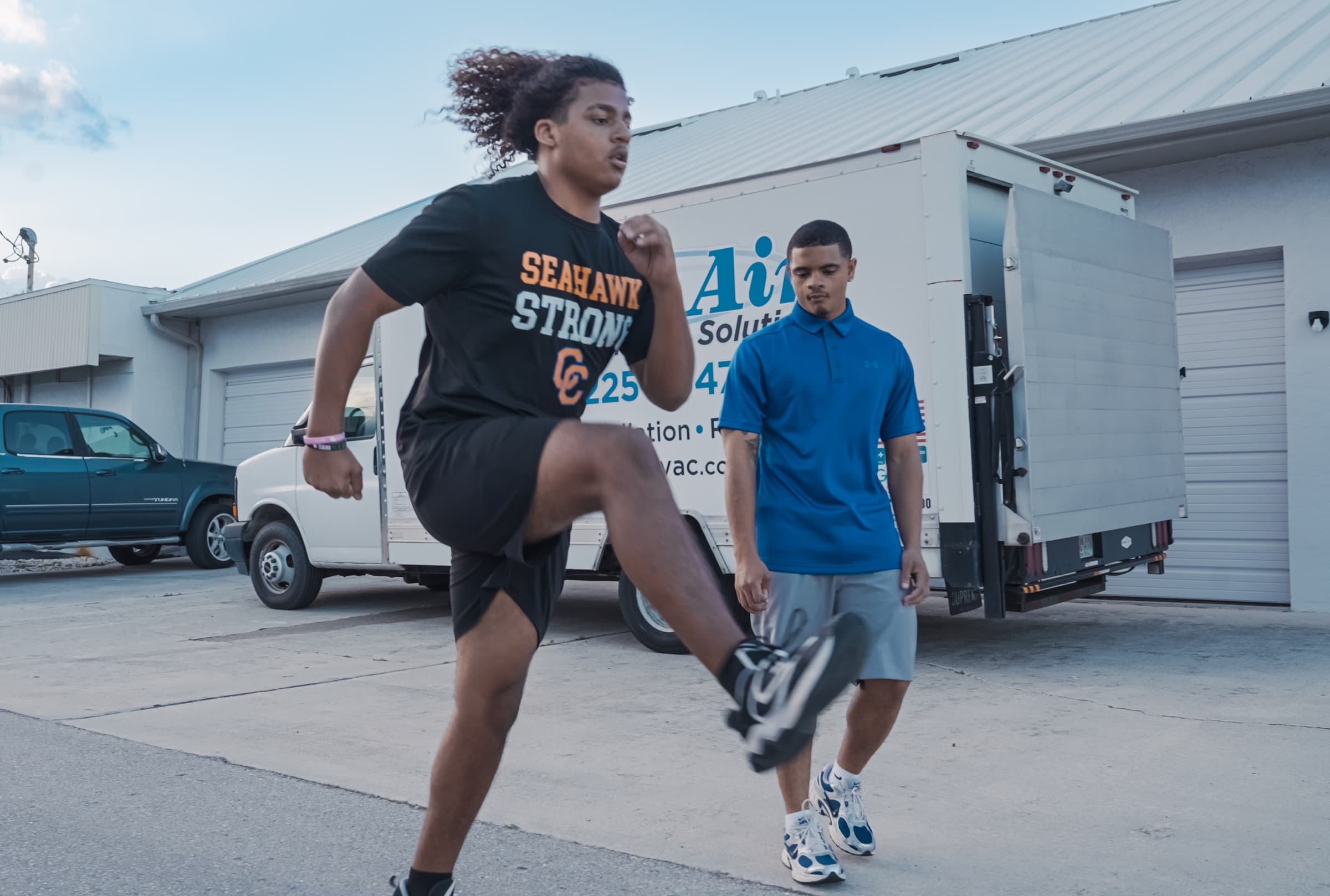
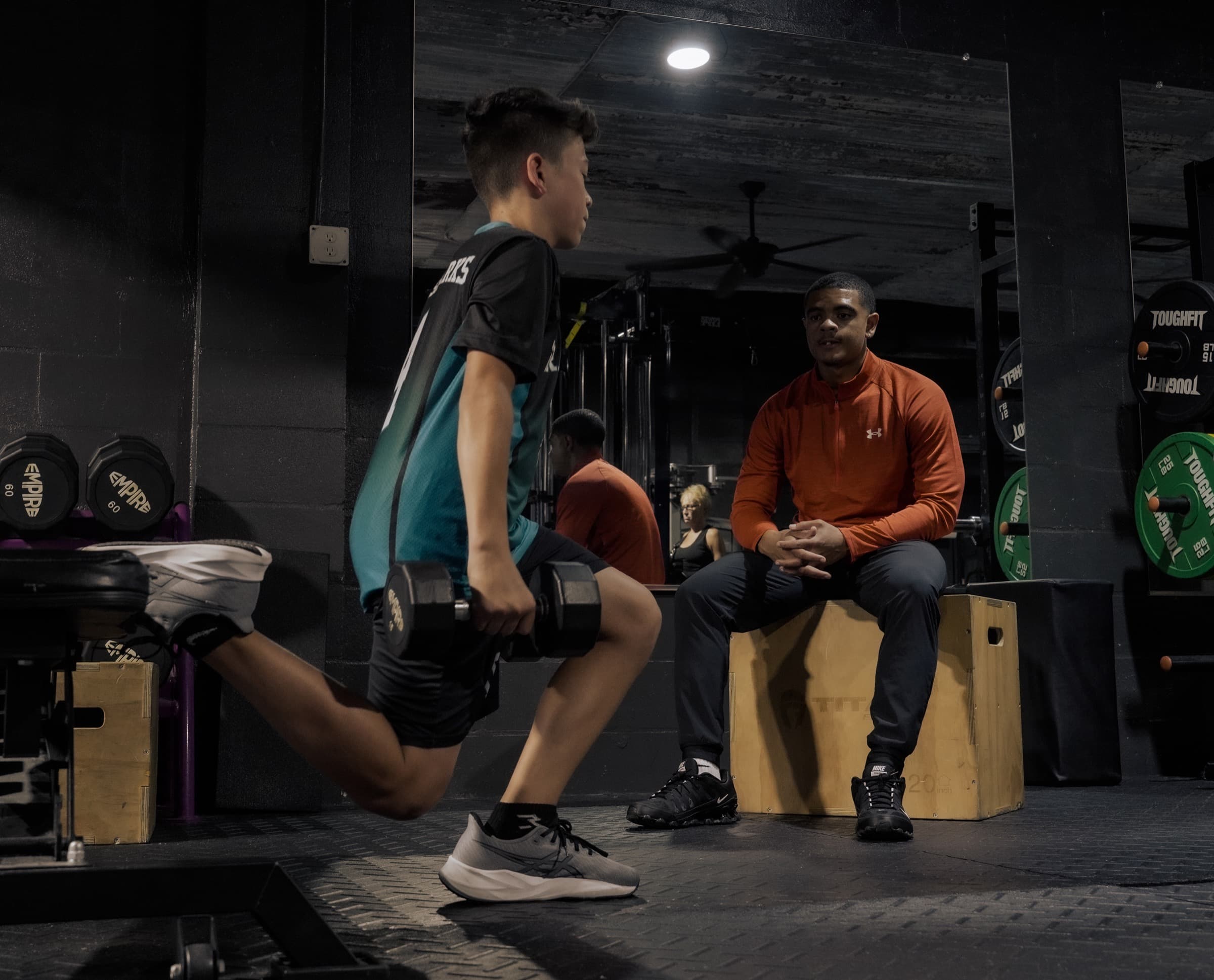
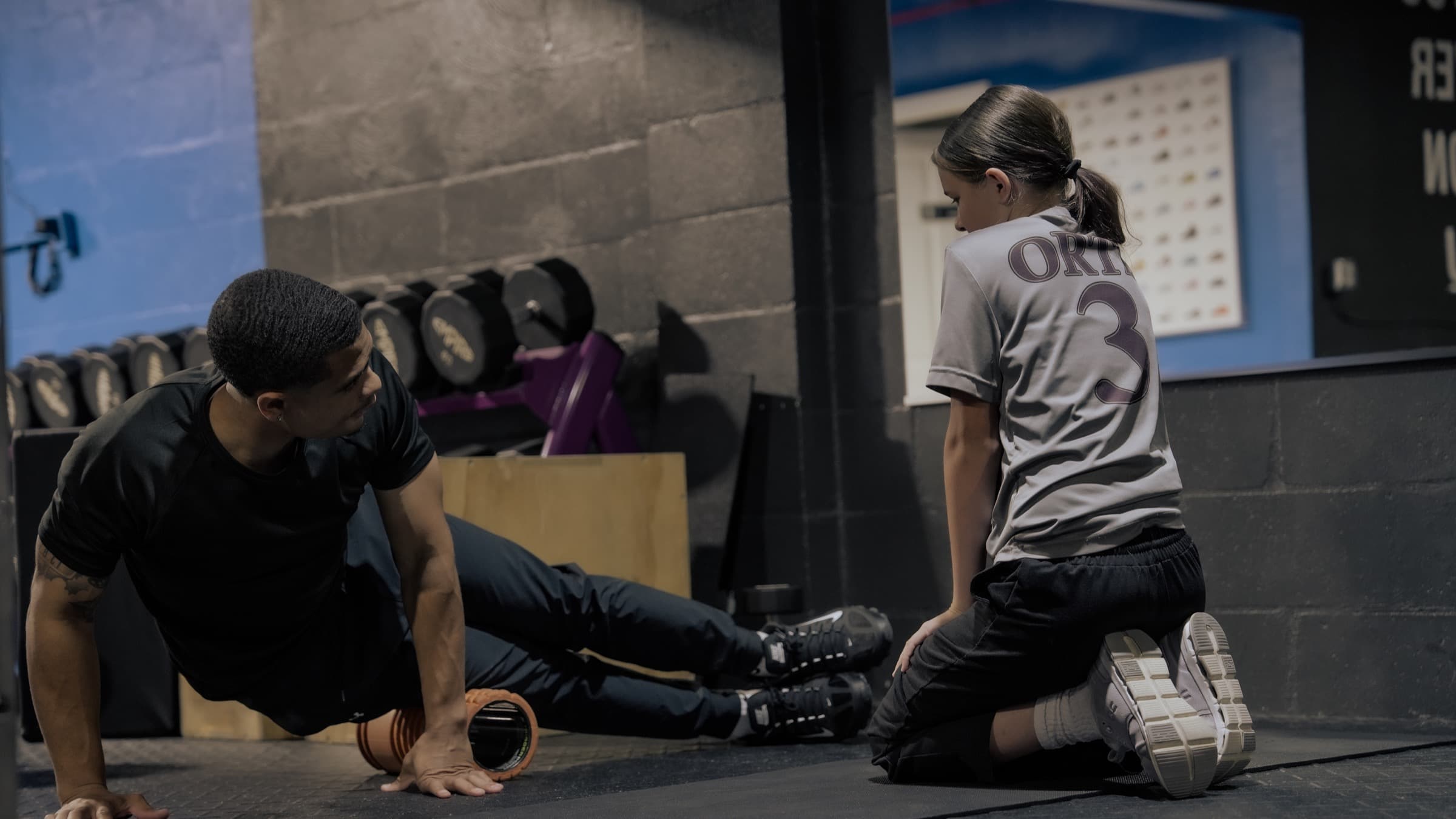
Every exercise has a reason.
No guesswork, and no session that would suit anyone else. Your program is built around how you move and what you’re training for, so every set in it is doing a job. Pick the door that sounds like you.
About Me
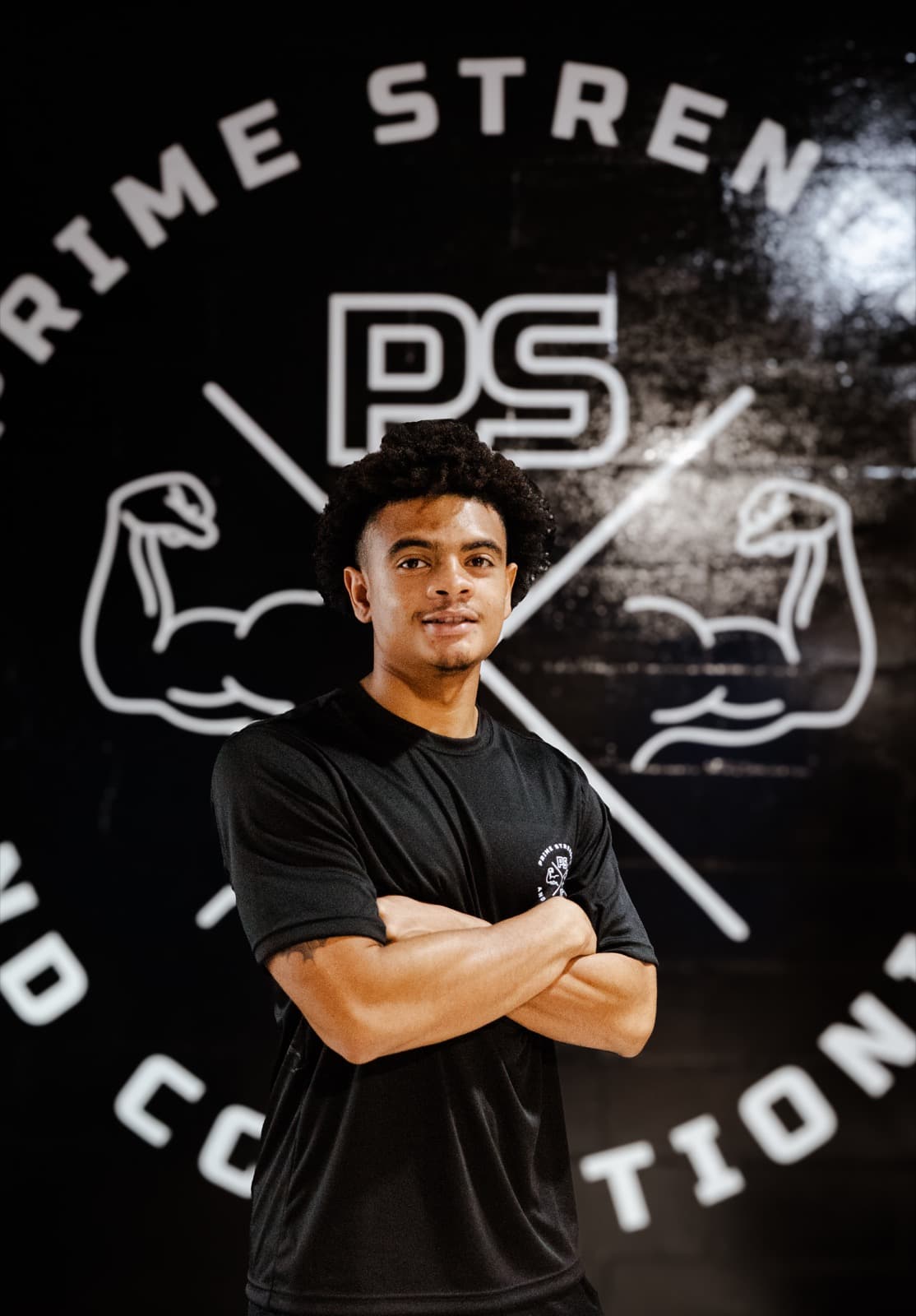
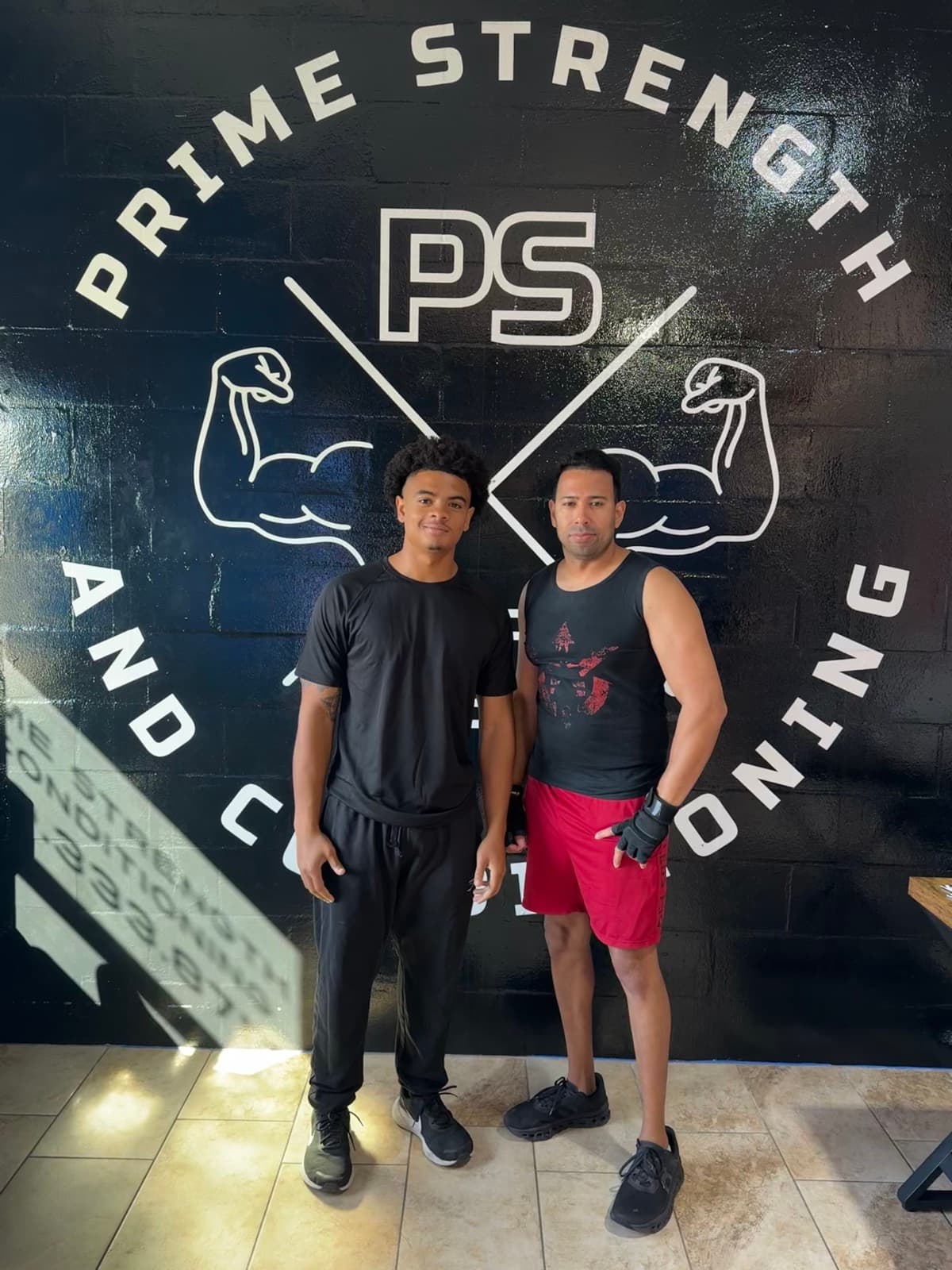
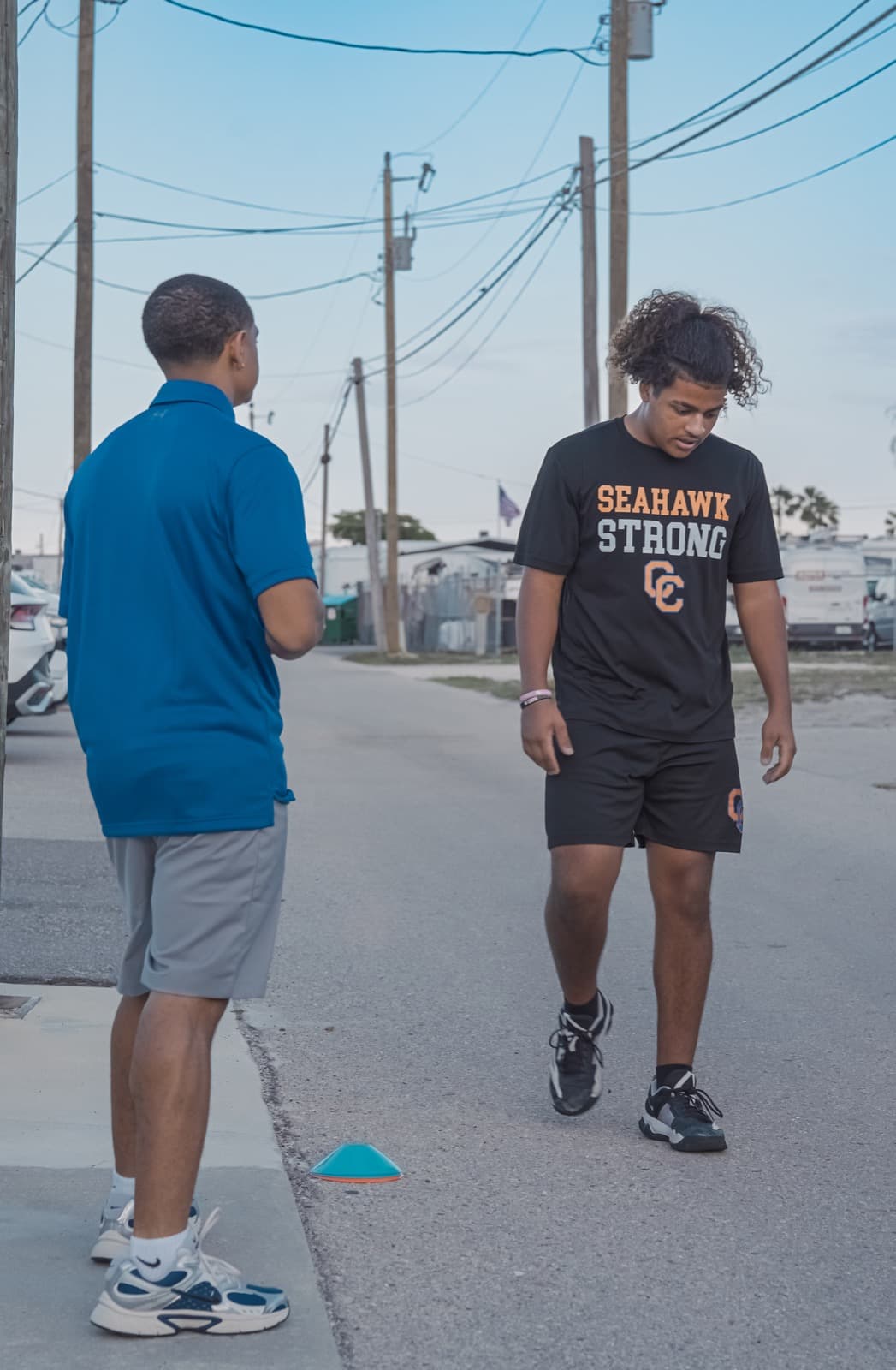
I have been involved in sports for as long as I can remember. At eighteen I injured my shoulder, and the rehabilitation that followed changed the way I understood training. It showed me how connected the body is, and how much has to work together before it becomes strong.
That experience is what led me into this profession. I earned my personal training certification through ISSA in 2023, and I have continued my education since: a nutrition certification, also through ISSA, and most recently the Biomechanics and Human Movement certification with DCB Fit in Miami, a facility that trains high-level adults alongside athletes progressing to the collegiate and professional levels.
Every program I write is built on the same five pillars: mobility and injury prevention, movement, strength, intent and nutrition. They apply to every client I take on. What changes between an adult rebuilding a routine and an athlete chasing a faster forty is how each pillar is applied, not whether it is.
Training in Cape Coral, Florida.
Five pillars
Mobility, movement and strength build on each other in that order. Intent and nutrition run underneath all three. They decide whether the first three amount to anything.
01
Mobility & injury prevention
These are the same job, not two.
- Desk hours and daily life leave you tight and working through less range than you have. Mobility work gives that range back before anything gets loaded on top of it.
- Multi-planar movement and real recovery, so the body can take the directions sport asks for, and keep taking them all season.
02
Movement
Train the patterns you actually use.
- Functional movement that makes ordinary life easier: stairs, luggage, getting off the floor without planning it first.
- Drills and exercises that look like what happens in a game, rather than what looks good in a gym.
03
Strength
The foundation everything else stands on.
You cannot progress past what you can hold. We build a baseline of foundational strength first, and every goal after that is measured against it.
04
Intent
Every rep is done on purpose.
Full effort and full attention on every drill. Going through the motions trains you to go through the motions.
05
Nutrition
Training is the stimulus. Food is what you build with.
- Body composition is decided at the table at least as much as it is in the gym. You can train well for twelve weeks and see almost none of it if what you eat doesn't support the work.
- An under-fueled athlete doesn't recover, doesn't adapt, and gets hurt more often. What goes in between sessions decides how much the sessions are worth.
Why the last plan stopped working
Recovery isn't what it was at 25
You can still train hard. You can't train hard every session and expect to adapt. Programs written for twenty-two-year-olds ignore that, and you pay for it in joints and plateaus.
You're training around a life
Desk hours, an old shoulder, four hours a week if the calendar cooperates. A plan that doesn't account for those isn't a plan. It's a wish list.
Nothing was being measured
If a session doesn't get recorded, it can't get progressed. That's how people spend eight months lifting the same weights and call it consistency.
Twelve weeks, written in three parts
Each phase does a different job, and each one earns the next. You will know which phase you are in and why, every week you train.
Accumulation
Build the work capacity to handle real training. Higher volume, moderate load, strict technique. This is where most people skip ahead and get hurt.
Intensification
Load climbs, volume comes down. You get stronger on the lifts that drive body composition, and the muscle you built in phase one has a reason to stay.
Realization
Express what you built. We retest the same numbers we started with, and the next block gets written from what actually happened, not from what should have.
Phase 1 — Accumulation
| Movement | W1 | W2 | W3 | W4 |
|---|---|---|---|---|
| Back squat | 135lb | 155lb | 175lb | 185lb |
| Bench press | 115lb | 125lb | 135lb | 145lb |
| Romanian DL | 155lb | 175lb | 195lb | 205lb |
| Chest-supported row | 90lb | 100lb | 110lb | 120lb |
Volume up 22%. Intensity held. Phase one earns phase two.
This is the first four weeks of an adult block. The loads climb on a plan, not on how the session felt, and every number is recorded so the next block is built on it.
At the end of week twelve we retest what we measured in week one, and the next block gets written from those numbers.
The part most people guess at
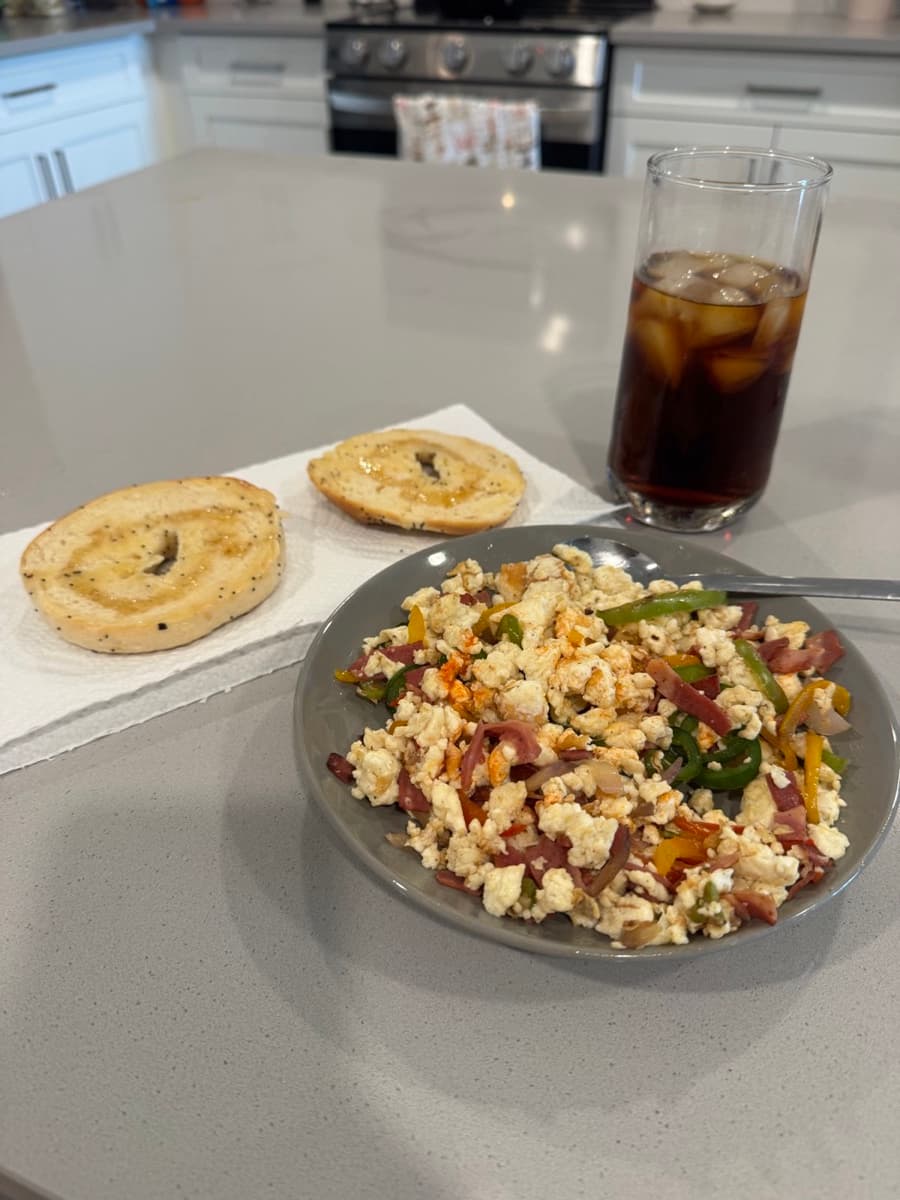
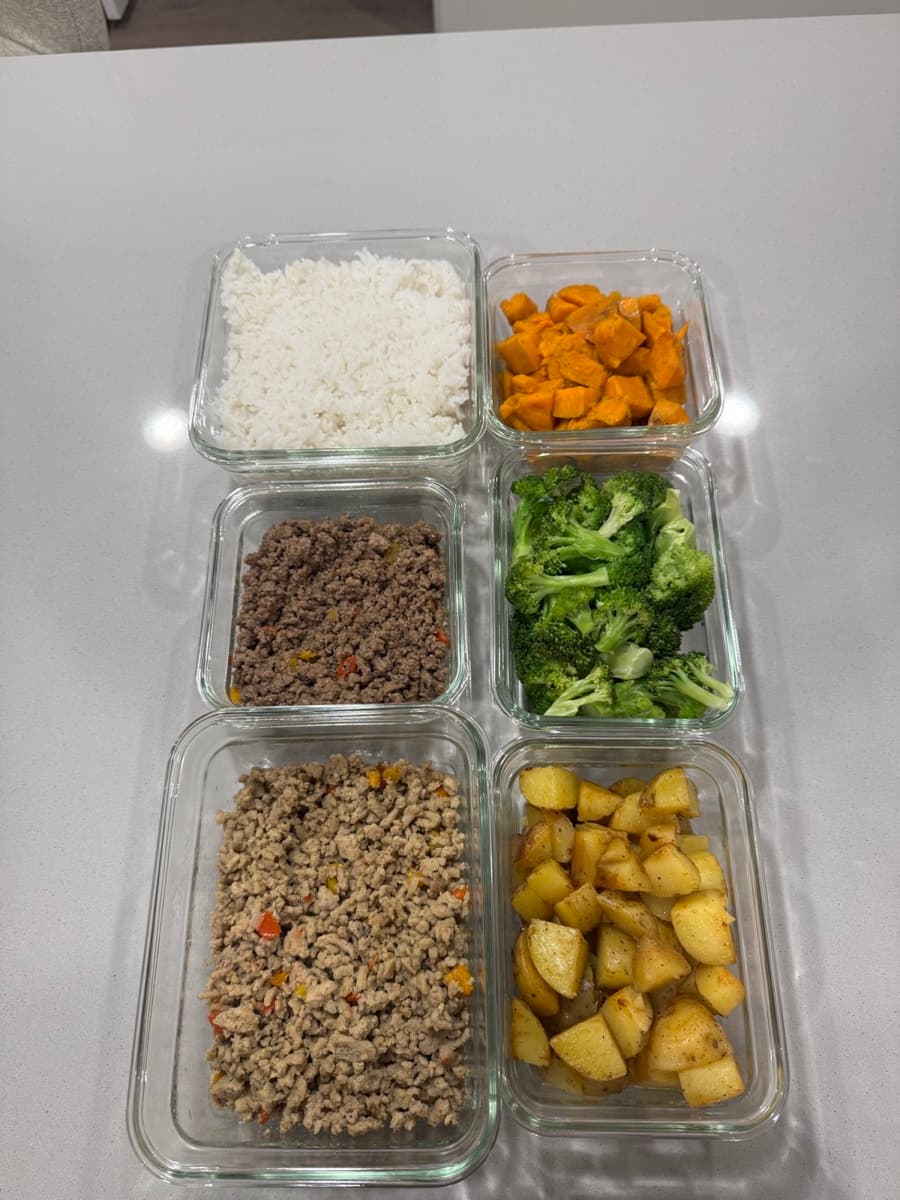
Tracking is not forever, and it is not about being accurate to the gram. It is about finding out what you really eat, because almost nobody guesses it correctly. Two weeks of honest tracking tells us more than a month of changes made blind.
Breakfast
Post-training
Lunch
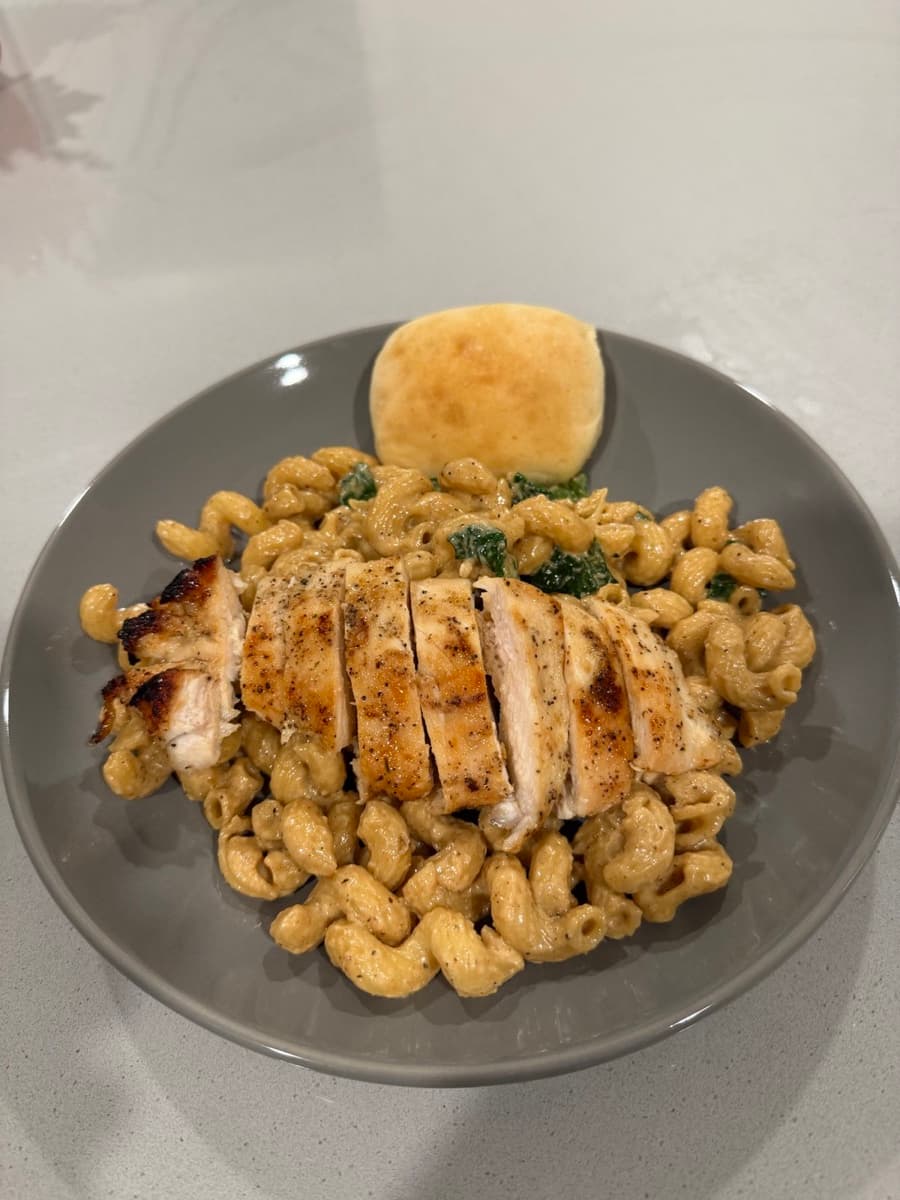
Dinner
No macro wins on its own
Most people pick one to fear and one to chase. All three have a job, and cutting any of them costs you somewhere else.
Carbohydrate
Without it you don't have the energy to finish a hard session. People cut carbs, feel flat, and blame the program. The program was never the problem.
Protein
Training creates the demand for muscle. Protein is what answers it. Under-eat it and you do all of the work and keep almost none of the result.
Fat
Recovery and hormones live here. Too little and you train hard without adapting to it, which feels like effort without progress because that's exactly what it is.
The Z3 Fueling Playbook
The why and the how much, in six pages: what each macro actually does, how to size a plate by hand without counting anything, when to eat around training, and how to hydrate through a Florida summer. Written for adults and athletes at the same time. Where the two differ, it says so.
The Z3 meal plan system
Enter your stats and it returns your daily calories and macro targets, then points you at the right plan of three: lean gain, recomposition, or maintenance. Five rotating options per meal, a portion guide for scaling them, and a weekly tracker.
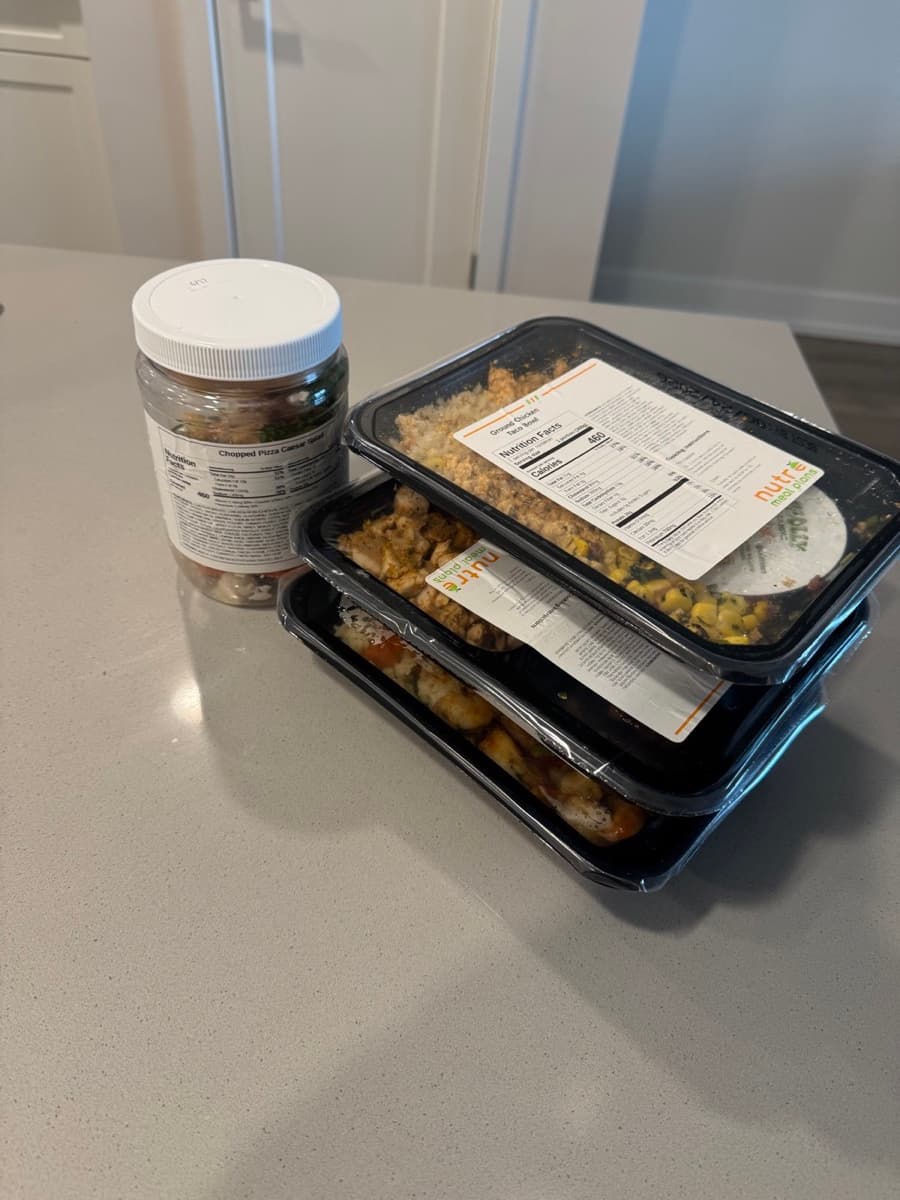
Nutre, with the macros already done
Prepared meals with the macros printed on the label. Not a requirement, and not better than cooking. But a plan you follow beats one you abandon on a Wednesday night.
Z3ATHLETICS
40% off your first order.
Speed is trained, not inherited
Acceleration mechanics, change of direction, and the strength underneath both, tested in week one and retested at the end of the block. If you came here for yourself and have an athlete at home, that work runs on the same system you see above.
Speed block — Acceleration
| Movement | W1 | W3 | W5 | W6 |
|---|---|---|---|---|
| 10 yd split | 1.82s | 1.78s | 1.74s | 1.71s |
| 20 yd split | 3.04s | 2.99s | 2.94s | 2.90s |
| 40 yd dash | 5.12s | 5.04s | 4.98s | 4.94s |
| Broad jump | 88in | 91in | 94in | 96in |
40-yard down 0.18s in six weeks. Measured, not estimated.
Before you book
I haven't trained in years. Where do we start?
Where you are. The first block is built from an assessment, not from a template, and the first few weeks are kept conservative so your joints and connective tissue catch up to your ambition.
I've got a bad knee. Can I still train?
Almost always, yes. We work around what hurts and strengthen what's underneath it. If something needs a physician or a physical therapist first, I'll tell you that instead of taking your money.
How much time does this take?
Three sessions a week, 45 to 60 minutes each, is enough to change your body composition. If you can only give two, the program gets written for two.
Where do we train?
Sessions are at 815 SE 47th St in Cape Coral. I train out of Prime Strength and Conditioning, so you get a proper facility rather than a garage or a park bench.
Do I need a gym membership?
No. I'm a private coach, so your session fee covers the training and the facility. There's no separate membership to buy. You book sessions in a package rather than one at a time: two, four or six sessions across a two-week stretch, or the same three options monthly. Whichever you pick, the block is written to that number so nothing is wasted.
Is nutrition part of this?
Yes. I hold a nutrition certification alongside the training one, and food is the fifth pillar for a reason. You can train perfectly and see very little if what you eat doesn't support it. The free Fueling Playbook covers the principles, and the meal plan goes further if you want it.
What if I travel, or miss a week?
Life happens, and a program that only works on perfect weeks is not a program. Tell me when you're away and the block gets adjusted around it rather than abandoned.
How long before I see anything?
Most people feel it in the first three or four weeks: sleep, energy, stairs that stop registering. Visible change usually takes eight to twelve, and only if food is in order too. The numbers move well before the mirror does, so we write them down.
Will lifting make me bulky?
No. Building noticeable size takes years of hard effort, a lot of food, and training built specifically for it. For most adults strength training does the opposite of what people fear. It holds on to the muscle you already have while fat comes off, which is what most people mean by toned.
Will I be sore all the time?
For the first week or two you will feel it, then far less as your body adapts. Soreness is not a measure of whether a session worked. If you are wrecked after every session, the programming is wrong, not you.
How is this different from an app or training on my own?
An app hands everyone the same plan and has nobody watching the rep. On your own you have the room and the rest is left to you. Here the program is written from how you actually move, someone is on the floor correcting it, and there is a record, so week four is built on what happened in week three.
Can I train with my partner or a friend?
Yes, and plenty of people prefer it. Showing up is easier when someone is expecting you. Ask on the call and I will tell you how it works and what it costs for two.
Am I too old for this?
No. Adults in their fifties and sixties add muscle and lose fat on the same principles as everyone else. The programming has to respect recovery, and that is most of what a coach is for.
What happens at the first session?
An assessment. Movement screen, baseline numbers, and a conversation about what the next twelve weeks should look like. You leave with a plan rather than a workout you'll never repeat. It's charged at the normal session rate. You're getting a full session of my time and a program built from it.
Send a text, and we'll find fifteen minutes
Tell me your goal, your history and your schedule. We'll set up a short call, and if it's a fit we'll book your first assessment from there.